- Homepage
- Aesthetic Procedures
- Rhinoplasty
- Ear Aesthetics
- Facial Rejuvenation
- Body Shaping
- Fat Injection and Stem Cell Transfer
- Vaser Liposuction (Fat Removal) and BBL (Brazilian Butt Lift)
- Breast Reduction and Breast Lift
- Breast Augmentation
- Lipedema Treatment
- Tummy Tuck (Abdominoplasty)
- Genital Area Aesthetics (Vaginoplasty – Vaginal Tightening – Labia Reduction)
- Enlarged Breasts in Men (Gynecomastia)
- Reconstruction Applications
- My writings
- Frequently Asked Questions About Eye Area Aesthetics
- How is body shaping performed with liposuction?
- Genital Aesthetic Surgery Improves Quality of Life
- You can achieve your desired look with a tummy tuck.
- Summer is over, cosmetic season has begun.
- Breast Reduction Surgery Improves Patient’s Quality of Life
- Breast Reduction Surgery Improves Patient’s Quality of Life
- Breast Augmentation Surgery: Both Aesthetic and Functional Aspects
- A Younger and More Dynamic Appearance is Possible with Mesotherapy
- Frequently Asked Questions About Breast Aesthetic Surgery
- About me
- Contact
- Homepage
- Aesthetic Procedures
- Rhinoplasty
- Ear Aesthetics
- Facial Rejuvenation
- Body Shaping
- Fat Injection and Stem Cell Transfer
- Vaser Liposuction (Fat Removal) and BBL (Brazilian Butt Lift)
- Breast Reduction and Breast Lift
- Breast Augmentation
- Lipedema Treatment
- Tummy Tuck (Abdominoplasty)
- Genital Area Aesthetics (Vaginoplasty – Vaginal Tightening – Labia Reduction)
- Enlarged Breasts in Men (Gynecomastia)
- Reconstruction Applications
- My writings
- Frequently Asked Questions About Eye Area Aesthetics
- How is body shaping performed with liposuction?
- Genital Aesthetic Surgery Improves Quality of Life
- You can achieve your desired look with a tummy tuck.
- Summer is over, cosmetic season has begun.
- Breast Reduction Surgery Improves Patient’s Quality of Life
- Breast Reduction Surgery Improves Patient’s Quality of Life
- Breast Augmentation Surgery: Both Aesthetic and Functional Aspects
- A Younger and More Dynamic Appearance is Possible with Mesotherapy
- Frequently Asked Questions About Breast Aesthetic Surgery
- About me
- Contact

What are fillers?
We’ve all seen them in various museums: earrings, necklaces, bracelets, combs, perfume bottles, and containers for preparing mixtures made of ivory, gold, silver, etc. All of these are evidence that women have strived for centuries to look younger, more beautiful, and more attractive. To this end, they have used various herbs, creams, and mixtures.
Although we evaluate a person as a whole, the first thing that catches our attention when we begin to communicate is the face. Scientific studies have shown that the perception of a face as beautiful or ugly is largely independent of culture. The human brain perceives and registers whether a face is beautiful or not extremely quickly. Generally, all women are aware of this and take great care of their faces.
The need for a youthful, fresh, radiant, and vibrant face has led to the creation of companies producing creams, lotions, and peeling products related to facials. However, the tissue loss caused by the melting and thinning of the skin and subcutaneous fat tissue during facial aging cannot be prevented by these creams. Dermal fillers have been developed to restore volume and fullness lost due to aging or trauma, reduce wrinkles, and moisturize the skin from within. Their non-surgical nature, ease of application, immediate results, and minimal side effects have increased their popularity, and thanks to R&D efforts in this field, more reliable products have become available.
Fillers are divided into three categories: temporary, semi-permanent, and permanent. The most popular are temporary fillers containing hyaluronic acid, as permanent fillers have a higher risk of side effects. These fillers, generally in gel form and fluid, are injected and cannot be withdrawn from the injection site.
Hyaluronic acid is a naturally occurring molecule found in our bodies in high concentrations and can be technologically obtained from bacteria. Therefore, the likelihood of allergic reactions is lower compared to animal-derived fillers. It has no carcinogenic effects. While primarily used on the face, fillers can also be used in other parts of the body.
Because skin and subcutaneous tissue thickness are not the same in every part of the body, companies develop and produce products with different molecular sizes and cross-linking ratios for injection into different body areas. The application area and injection depth of these products naturally differ. For the under-eye area, which has thinner skin, fillers with a lower cross-linking ratio and higher molecular weight are used to add volume to the chin or cheek area.
Because hyaluronic acid is a molecule with water-retaining properties, it adds volume to the area where it is injected and can be practically applied in an outpatient setting. As mentioned earlier, there are different products for application to different areas, and only a specialist can know which product is suitable for which area. Different products can be applied to different areas of the body for various problems in the same session.
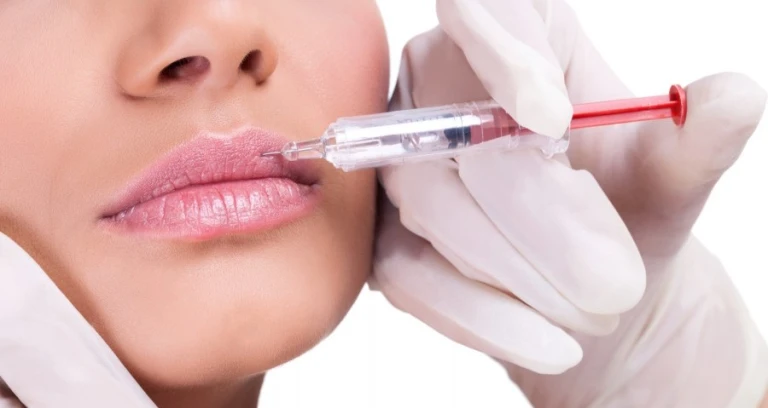
Areas where filler injections are applied include the grooves extending from the sides of the nose to the corners of the mouth, the lips, under the eyes, between the eyebrows, the cheeks, the chin, the neck, the hands, and other areas of the body with tissue loss. Sometimes, if the nasal bridge is excessively curved or sunken due to rhinoplasty or trauma, filler injections can be used to add height to the nasal bridge. Mild facial asymmetries, whether congenital or acquired, can also be corrected with filler injections. Filler injections can be applied to anyone, male or female, who has completed puberty (considering additional health problems).
The effect lasts 8-12 months, depending on the area treated, the brand and type of product, and the individual characteristics of the person receiving the treatment. During this time, it is broken down and eliminated from the body without causing harm. If the person receiving the filler is not satisfied with the results, there is no reversal with permanent fillers, and removing these substances may require some difficult surgical procedures. The advantage of absorbable fillers is that there are substances that dissolve them, and with a little patience, they will dissolve on their own.
Before the procedure, local anesthesia can be applied with anesthetic creams or injections, and some brands also have pain relievers in their own syringes. The procedure takes approximately 10-20 minutes.
After the filler injection, redness, swelling, and bruising may occur depending on the sensitivity of the area. Possible side effects of filler procedures include pain, swelling, and discoloration at the injection site. Very rarely, granulomas and abscesses may form. While animal-derived or silicone-based fillers have a longer duration of effect, they also carry a higher risk of allergic reactions, cyst formation, and granuloma formation. Individuals using aspirin should stop taking it 1 week before the filler procedure and should not use it for 2-3 days afterward; otherwise, severe bruising may occur at the injection sites.
Applying ice after filler injection prevents or reduces bruising. Since hyaluronic acid works by retaining water, it is recommended to drink plenty of water for the first few days.
Recently, bioexpander has become popular in skin rejuvenation and wrinkle treatment. Bioexpander is also a type of hyaluronic acid. Because of its very fine structure, this filler, like a light filler, can be used safely, especially around the eyes. Since it contains pure hyaluronic acid, it also enhances the vitality of the area where it is applied.